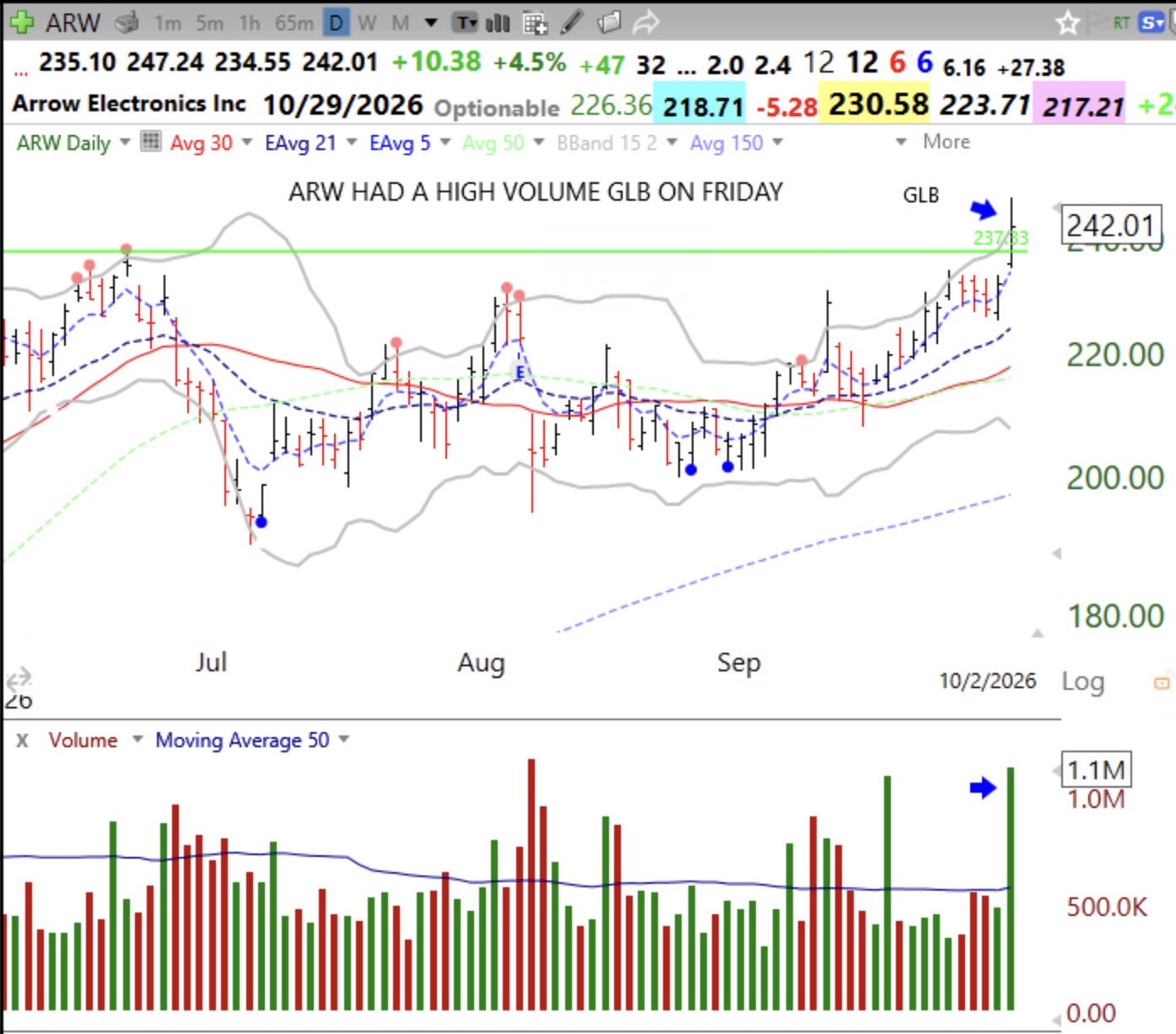
AMZN had an above average volume GLB on Friday. It reports earnings this week. See daily and monthly charts. AMZN must not close below green line @258.60. To see my presentation to the MoneyShow last week where I describe the GLB setup and how I trade it, please go to the Webinars tab on this blog above. You can also sign up in the video to get on the waiting list for my Masterclass with Richard Moglen. Also, tab above for the discount coupon for TC2000, which I use to identify my setups.
I will present on Wednesday for the first time at the MoneyShow virtual event. It is free to register here and you will receive a recording if you miss the live event. Just prior to my presentation, Les masonson will present about his new book using a TQQQ trading strategy similar to the one I have posted about. This book taught me a lot about the QQQ ETF.
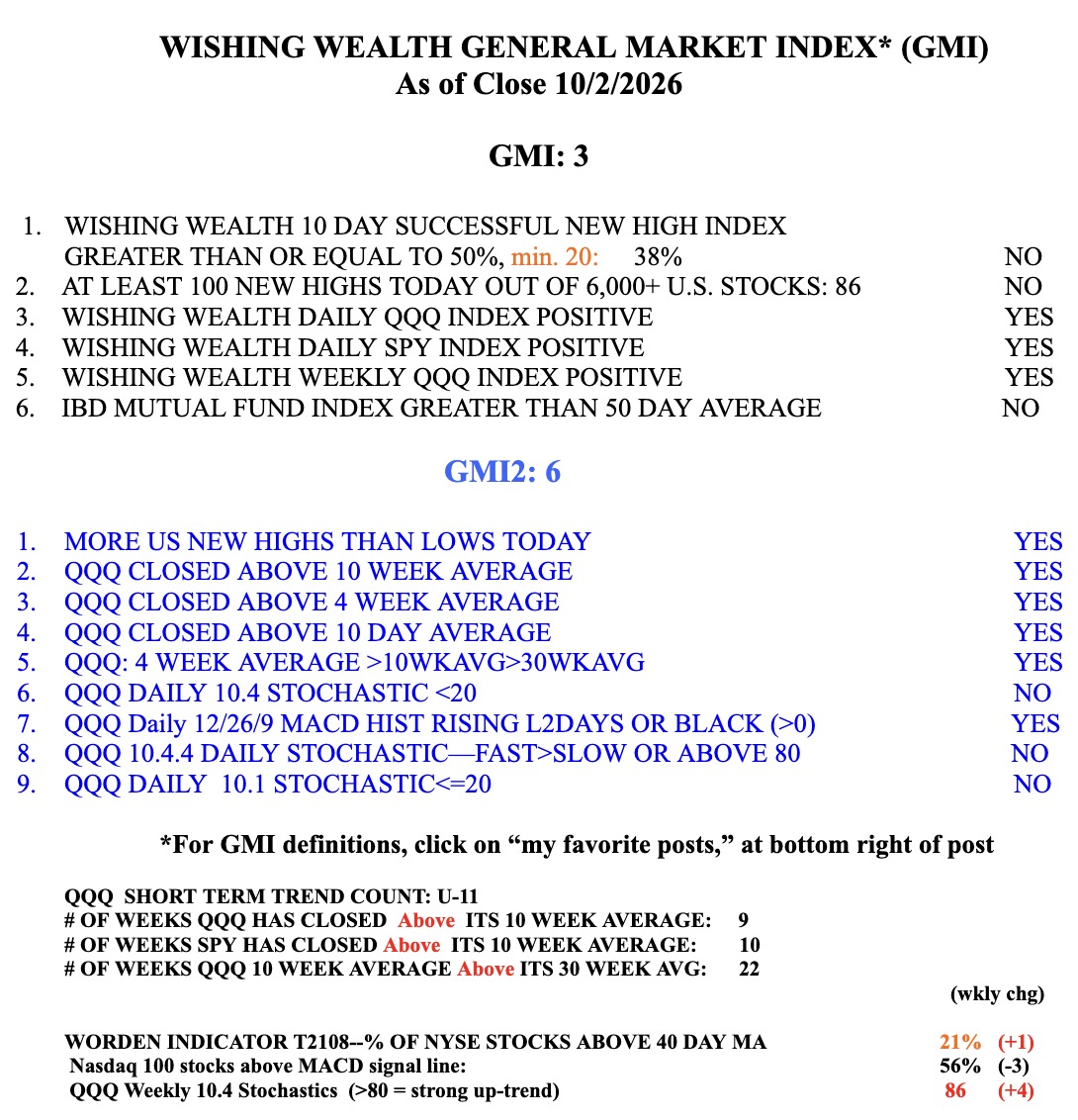
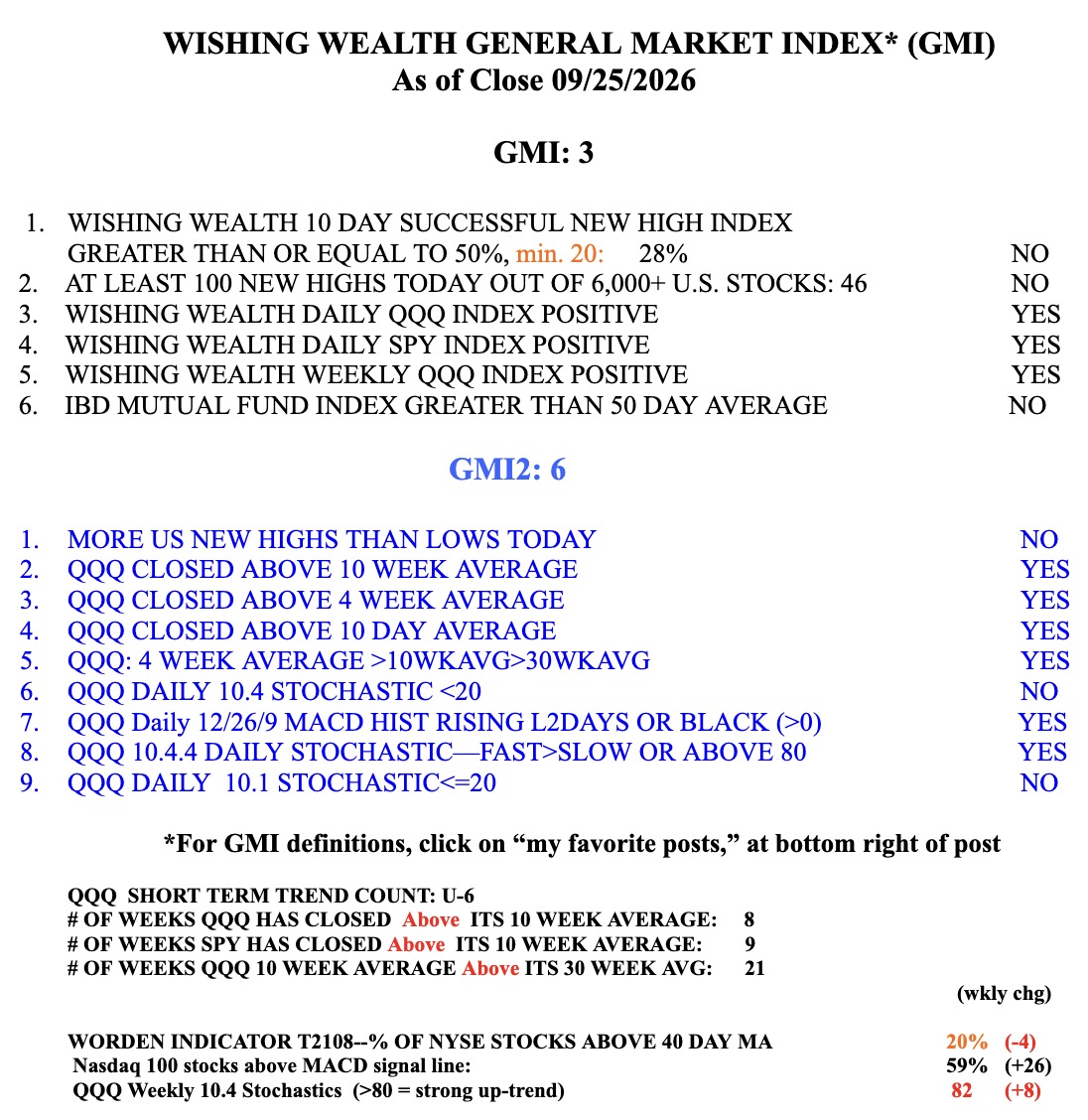
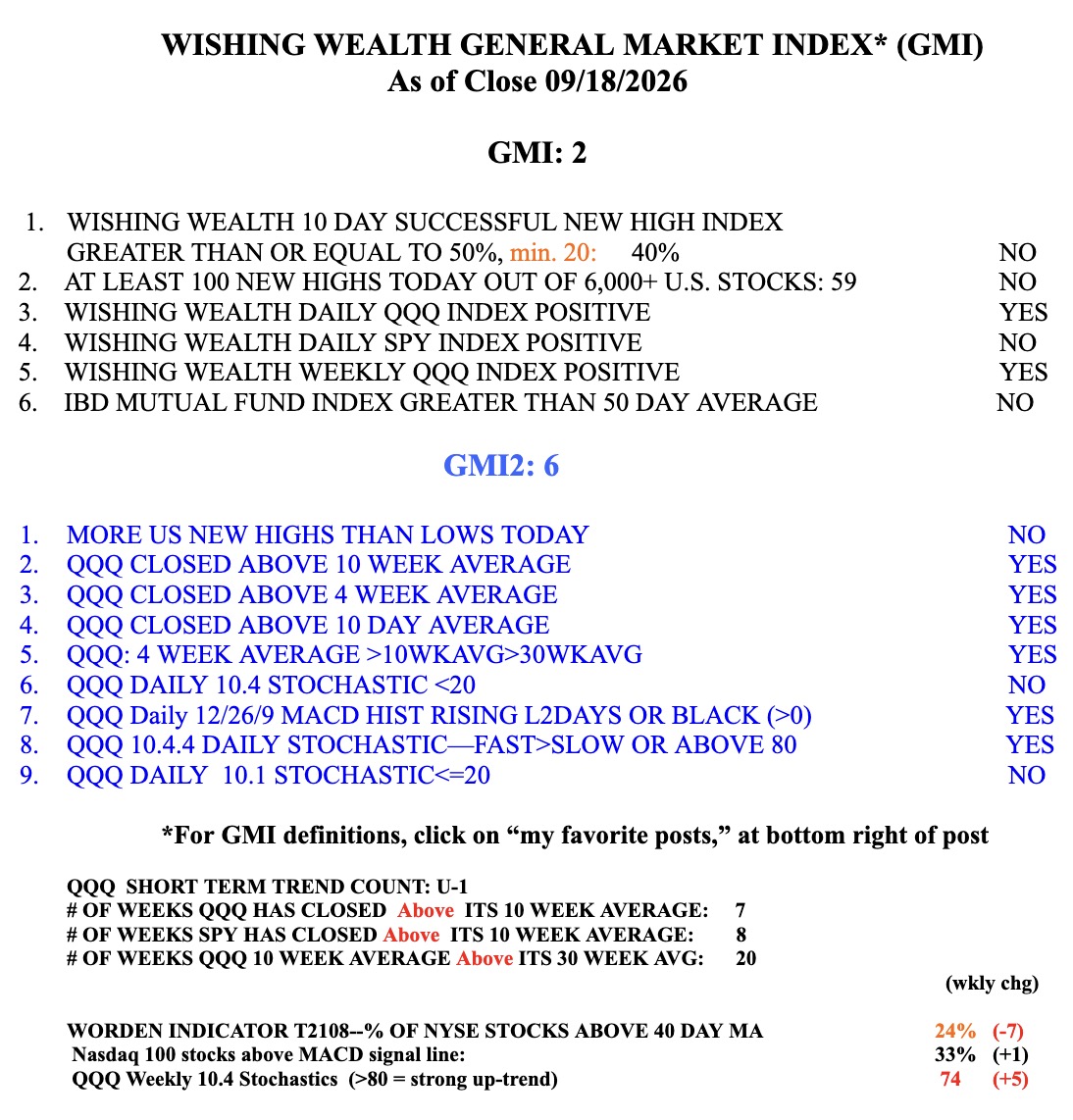
I know the market is volatile, as it reacts to every new twist and turn in the Iraq war. Still, with the GMI= GREEN, I am tiptoeing into the strongest stocks. As I will describe in Wednesday’s talk, I am focusing on the few stocks each day that trade at an ATH (all-time high). The GMI is weighted toward those stocks. On Friday, 152/6407 US stocks reached an ATH. That is 2.3%! To me, that indicates these stocks are showing extremely high relative strength. These stocks beat 98% of all US stocks. I focus on the minority of these stocks that had a GLB Friday or last week.
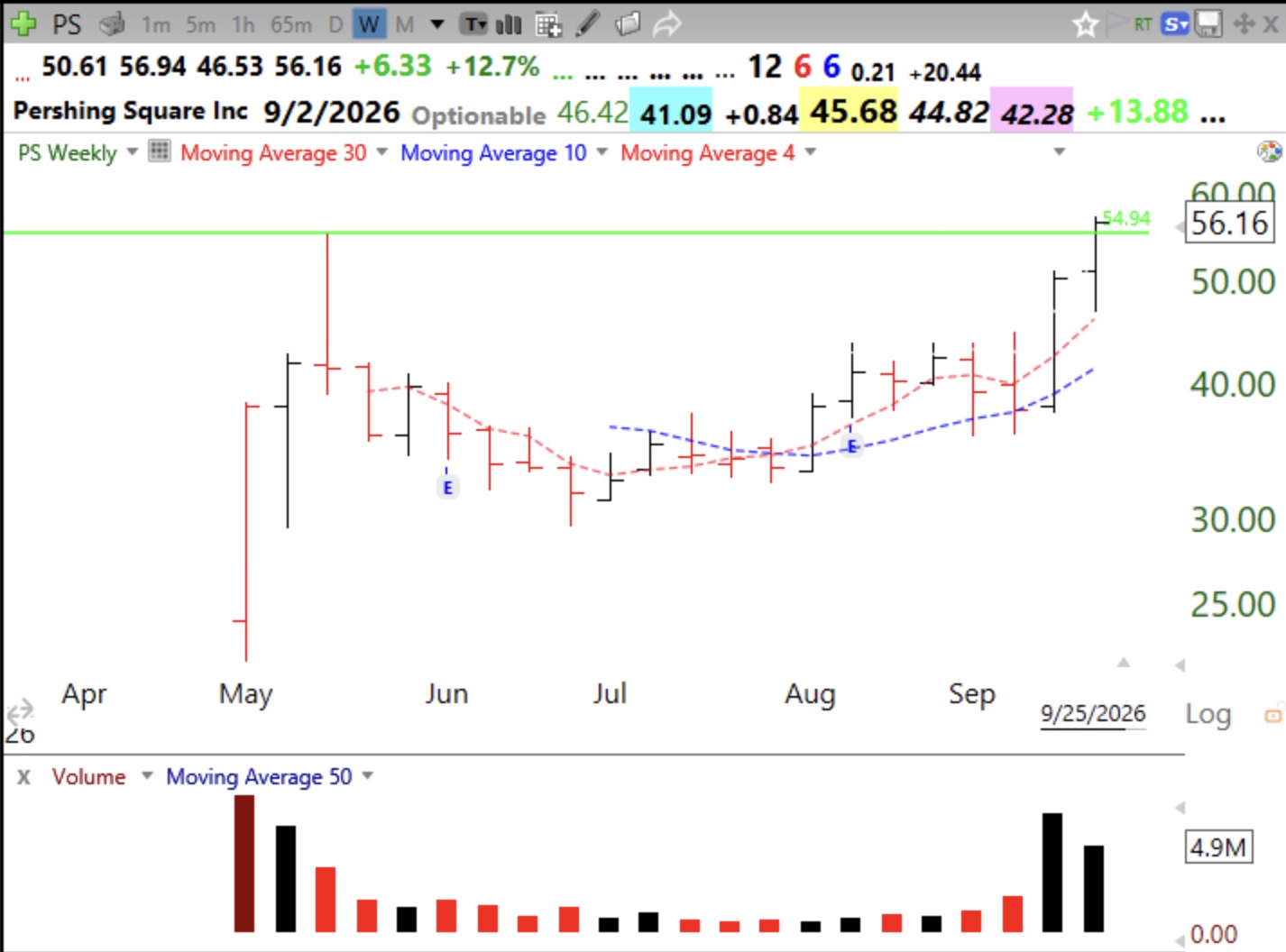
I found that 32 of the 152 stocks were banks, followed by 20 that were in the semiconductor sector. I found that AMD had a GLB last week. See its weekly chart. A close below the green line @267.08 would constitute a failed GLB and require me to exit if I had a position. Other stocks with a high volume GLB last week include: DELL, MRVL, CLS, see their charts below.
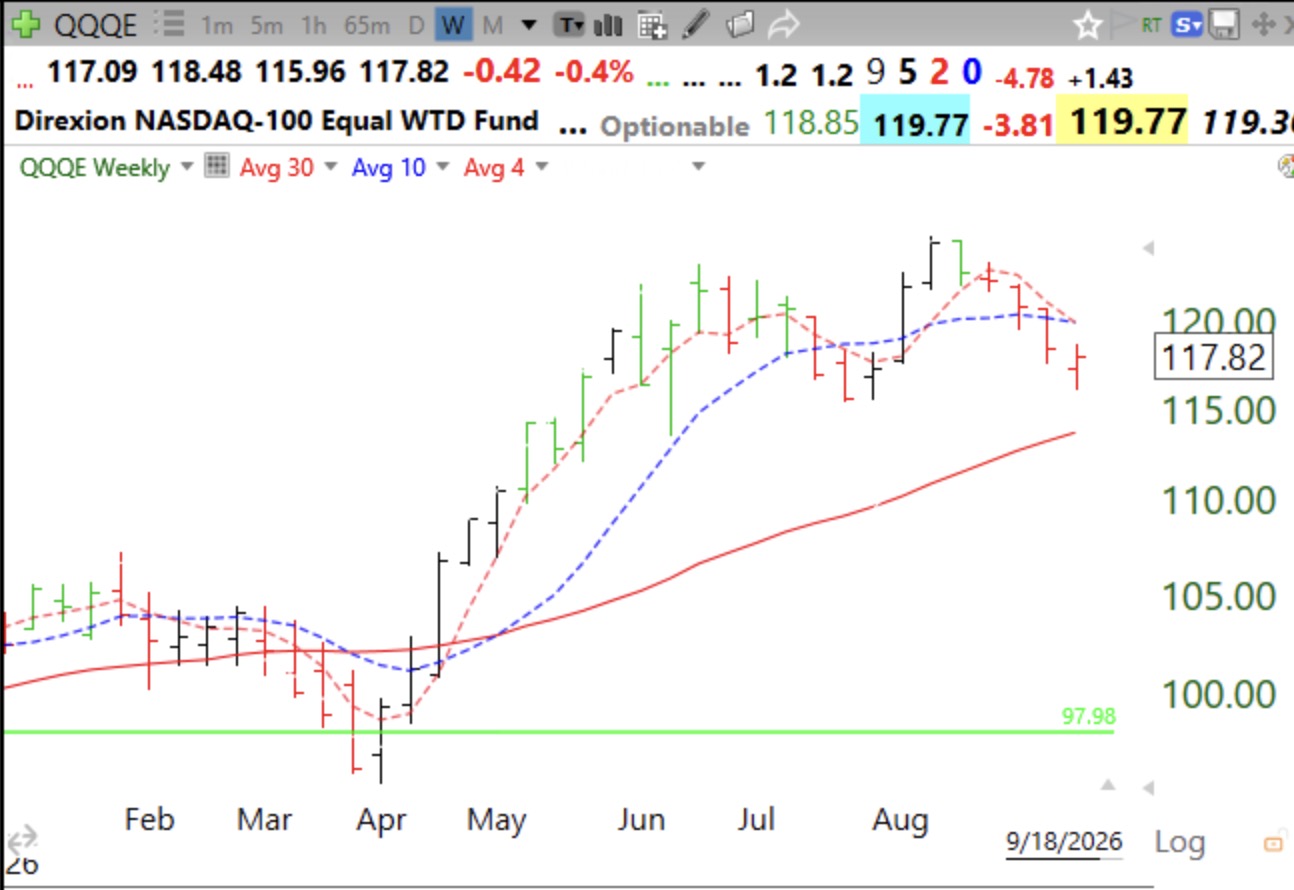
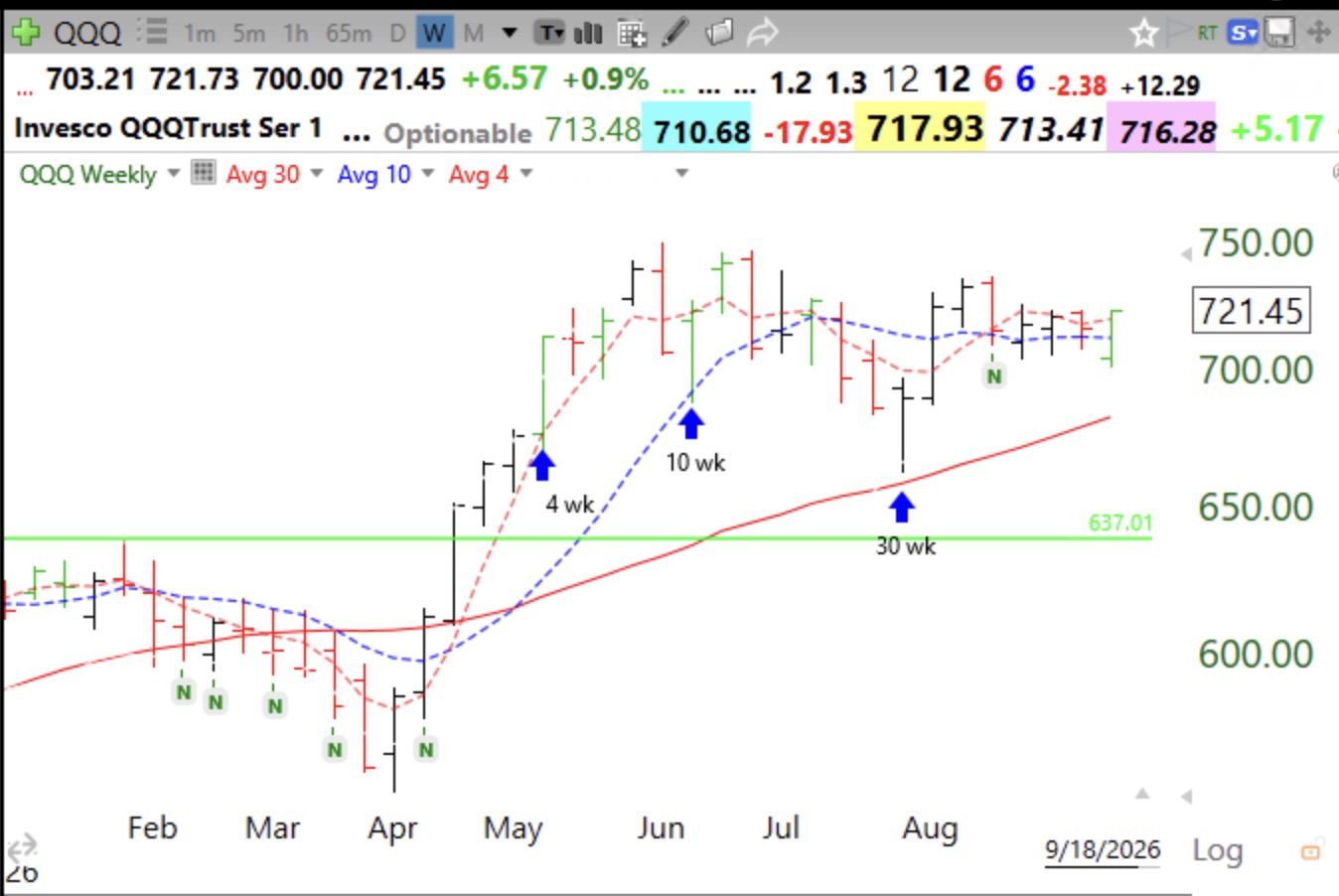
I will discuss the evidence for my GLB (green line breakout) setup during my presentation to MoneyShow 2026 on April 22. Please disseminate this link widely to all who you think will enjoy hearing about my strategies. This link works for emails. This weekly chart of QQQ shows my primary way to gauge its trend. The 4 and 10 week averages are below the 30 week. Many tops have occurred with a rebound to the 30 week only to decline below it. When the 4 and 10 week averages climb back above the 30 week we have a Stage 2 up-trend. Just study this chart. Compare the prior up-trend to the current pattern.